
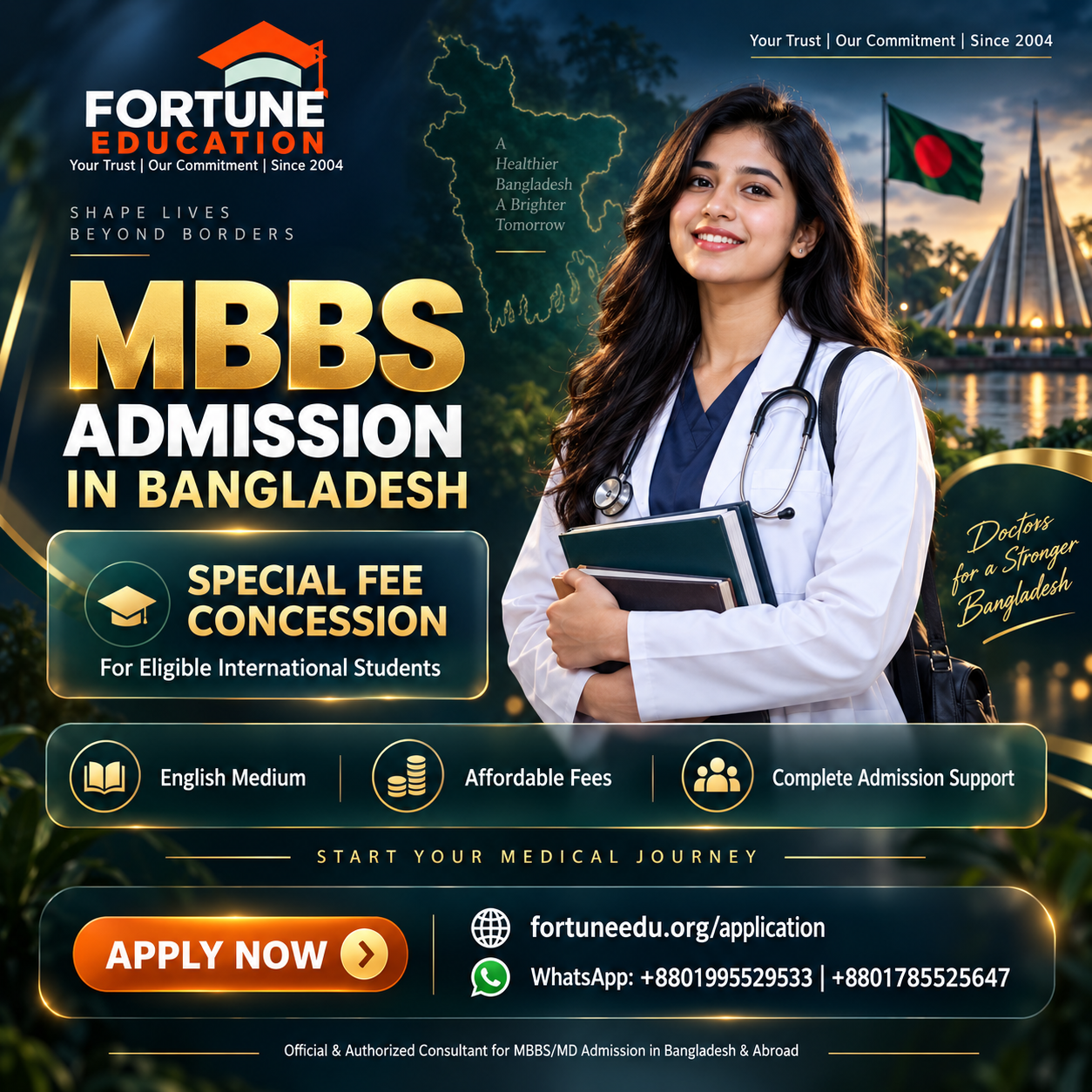
Bangladesh: A Country of Heritage, Opportunity and Resilience
About Bangladesh
Bangladesh—often known as the “Land of Rivers”—is a vibrant South Asian nation where centuries-old traditions exist alongside rapid economic, technological and social development. From the lively streets of Dhaka to the greenery of its countryside and the world’s largest river delta, Bangladesh offers international visitors and students a welcoming blend of culture, natural beauty and modern opportunity.
Economy and Global Trade
Bangladesh has transformed into one of South Asia’s most dynamic economies. It is now the world’s second-largest exporter of ready-made garments, while pharmaceuticals, agriculture, leather goods, information technology and light engineering are becoming increasingly important. Strong exports and record remittance inflows supported an economic recovery during the latter part of FY2025, according to the World Bank. World Bank: Bangladesh
The country continues to encourage export diversification, entrepreneurship, skills development and foreign investment to create sustainable employment and strengthen its position in international trade.
Technology and Digital Transformation
Bangladesh’s digital ecosystem is expanding rapidly. Greater internet and mobile connectivity, digital financial services, e-commerce platforms and technology-focused education have changed how people communicate, study and conduct business.
Software companies and emerging startups are contributing to areas such as fintech, healthcare technology, logistics, education and artificial intelligence. Investments in high-tech parks, digital public services and entrepreneurship are supporting the country’s ambition to build a more innovative, knowledge-based economy.
Climate Resilience and Sustainability
As a densely populated delta nation, Bangladesh is highly exposed to flooding, cyclones, river erosion, extreme heat and rising sea levels. These challenges have made climate resilience a national priority.
The country has gained international recognition for disaster preparedness and climate adaptation. Current initiatives include stronger coastal protection, renewable energy, climate-resilient agriculture, improved early-warning systems and more sustainable urban planning. The World Bank describes Bangladesh as a leader in climate adaptation and disaster preparedness. World Bank: Bangladesh
Culture and Tourism
Bangladesh possesses a rich cultural identity shaped by Bengali language, literature, music, art and cuisine. Pahela Baishakh, Ekushey February, Eid celebrations, Durga Puja and traditional fairs reflect the country’s diverse social and religious heritage.
Visitors can explore the Sundarbans, Cox’s Bazar, the tea gardens of Sylhet, the hill districts of Chattogram, archaeological sites and historic mosques and temples. UNESCO-recognised heritage—including Jamdani weaving, traditional Baul music and the historic sites of Bagerhat and Paharpur—further demonstrates the depth of Bangladesh’s cultural legacy. UNESCO: Bangladesh’s Intangible Cultural Heritage
Education and Medical Studies
Bangladesh has made considerable progress in expanding access to education. Universities and professional institutions are increasingly incorporating digital learning, research, practical training and international academic collaboration.
The country has also become an established destination for international medical students, particularly those from South Asia, Africa and the Middle East. Many medical colleges offer English-medium MBBS programmes, modern teaching facilities, clinical exposure and comparatively affordable tuition and living costs. International students also benefit from studying within Bangladesh’s extensive hospital and community healthcare system.
Applicants should always verify a medical college’s current government approval, university affiliation and recognition requirements with the relevant authorities in the country where they intend to practise.
Infrastructure and Connectivity
Major infrastructure projects have significantly improved connectivity across Bangladesh. Developments such as the Padma Bridge, Dhaka Metro Rail, Karnaphuli Tunnel, upgraded highways and continuing improvements to airports, railways and seaports are helping people and goods move more efficiently.
Further investment in power, telecommunications, logistics and port capacity is expected to support trade, education, tourism and regional connectivity.
International Relations
Bangladesh maintains active diplomatic and economic relationships with neighbouring countries and major international partners. It participates in organisations including the United Nations, SAARC, BIMSTEC, the Organisation of Islamic Cooperation and the Commonwealth.
The country has also earned international respect through its longstanding contribution to United Nations peacekeeping operations and its involvement in humanitarian assistance, climate advocacy and regional cooperation. United Nations Peacekeeping Contributions
A Promising Future
Bangladesh is moving forward through resilience, enterprise and the energy of its young population. Although challenges remain—including climate risks, employment needs and the demand for continued institutional and economic reform—the country possesses strong potential for sustainable development.
By combining its cultural heritage with modern ambition, Bangladesh is strengthening its role as an important centre for trade, education, innovation and regional cooperation.
Bangladesh: An Ideal Destination for MBBS for Indian Students
Bangladesh, our neighbor to the east, is not just a country rich in cultural heritage and natural beauty; it also boasts a commendable education system that has attracted international attention, especially in the field of medicine. Over the years, many Indian students have chosen Bangladesh as their preferred destination to pursue their MBBS degree, and there are plenty of reasons why.
Why Bangladesh for MBBS?
- Quality Education at an Affordable Cost: Bangladeshi medical institutions maintain a high academic standard, ensuring that students receive a world-class education. Furthermore, compared to many western countries and even private institutions in India, the cost of education in Bangladesh is much more affordable.
- MCI and WHO Recognized Medical Colleges: Medical colleges in Bangladesh are recognized by the Medical Council of India (MCI) and the World Health Organization (WHO). This means that after completing the MBBS degree in Bangladesh, Indian students can appear for the Foreign Medical Graduates Examination (FMGE) in India and practice medicine.
- Curriculum Similar to India: The medical curriculum in Bangladesh is similar to India’s, which makes it easier for Indian students to adapt and excel. Additionally, the mode of instruction is in English, ensuring that language is not a barrier.
- Cultural and Geographical Proximity: Bangladesh shares a lot in common with India in terms of culture, food, and festivals. This similarity makes Indian students feel more at home, reducing the challenges of homesickness and cultural adaptation.
- Friendly Environment: Bangladeshi people are known for their warm hospitality. The friendly and welcoming nature of locals, coupled with a safe environment, creates a comfortable atmosphere for Indian students.
Discover Bangladesh Beyond Academics
While the primary purpose for Indian students in Bangladesh is academic, it’s worth exploring the nation’s treasures. Bangladesh is adorned with the Sundarbans, the largest mangrove forest in the world, historic sites like the 60 Dome Mosque in Bagerhat, and the vibrant city life of Dhaka.
In addition, relish the delectable Bangladeshi cuisine, witness the colorful festivals, and engage in community services and internships to get a holistic experience of Bangladesh.
BANGLADESH AT A GLANCE
- Official Name: The People’s Republic of Bangladesh
- State Religion: Islam however other fundamental religions to be specific to Hinduism, Buddhism, Christianity are drilled in peace and concordance.
- State Language: Bangla
- National Anthem: The initial ten lines of “Amar Sonar Bangla”. composed by Nobel Laureate Rabindranath Tagore.
- National Flag: Consists of a circle hued red all through its zone, laying on a green rectangular foundation. The length to width proportion of the square shape is 10:6 and the circle has a span of one-fifth of the length.
- National Emblem: The national blossom “Shapla” (Nymphaea-nouchali) laying on water, having on each side an ear of paddy and being surmounted by three associated leaves of jute with two stars on each side of the takes off.
- Capital: Dhaka
- Nationality: Bangladeshi
- Name of Currency: Taka (TK)
- Categories:
- Notes:Taka 1000, 500, 100, 50, 20, 10, 5, 2 and 1
- Coins: Taka 5, 2, 1 and Paisa 50, 25, 10, 5, 2 and 1
- Land Location: Between 20°34′ and 26°38′ north scope and somewhere in the range of 88°01′ and 92°41′ east longitude.
- Limit: North: India
- West: India
- South: Bay of Bengal
- East: India and Myanmar
Zone: 56977 sq. miles or 147570 sq. km.
Regional Water: 200 nautical miles.
FOOD:
Nourishment in Daily Life. Rice and fish are the establishments of the eating routine; multi-day without a dinner with rice is almost incomprehensible. Fish, meats, poultry, and vegetables are cooked in zesty curry ( torkari ) sauces that fuse cumin, coriander, cloves, cinnamon, garlic, and different flavors.
Muslims don’t devour pork and Hindus don’t expend meat. Progressively normal is the planning of ruti, an entire wheat roundabout flatbread, early in the day, which is eaten with curries from the prior night. Likewise critical to the eating routine is dal, a thin soup in view of ground lentils, chickpeas, or different vegetables that is poured over rice. A sweet custom made yogurt normally completes a dinner. A run of the mill dinner comprises of an expansive bowl of rice to which is included little parts of fish and vegetable curries.
Breakfast is the supper that differs the most, being rice-or bread-based. A most loved breakfast dish is panthabhat, extra cool rice in water or drains blended with gur (date palm sugar). Nourishment is eaten with the correct hand by blending the curry into the rice and after that get-together segments with the fingertips. In city eateries that take into account nonnatives, individuals may utilize flatware.
Three dinners are expended day by day. Water is the most widely recognized drink. Prior to the supper, the correct hand is washed with water over the eating dish. With the spotless knuckles of the correct hand the inside of the bowl is rubbed, the water is disposed of, and the bowl is loaded up with sustenance. After the feast, one washes the correct hand once more, holding it over the exhausted bowl.
Tidbits incorporate organic products, for example, banana, mango, and jackfruit, and additionally puffed rice and little browned sustenance things. For some men, particularly in urbanized areas and bazaars, no day is finished without some sweet tea with drain at a little tea slow down, now and then joined by desserts.
Nourishment Customs at Ceremonial Occasions. At weddings and on imperative occasions, nourishment assumes a critical part. At occasion or formal capacities, visitors are urged to eat to their ability. At weddings, a typical sustenance is biryani, a rice dish with sheep or hamburger and a mix of flavors, especially saffron.
On uncommon events, the rice utilized is one of the better, more slender grained composes. On the off chance that biryani isn’t eaten, a total multicourse dinner is served: nourishments are conveyed out consecutively and added to one’s rice bowl after the past course is done. An entire supper may incorporate chicken, angle, vegetable, goat, or hamburger curries and dal. The last piece of rice is done with yogurt ( doi ).
On other vital events, for example, the Eid occasions, a goat or cow is butchered on the premises and curries are set up from the new meat. A portion of the meat is given to relatives and to poor people.
HIGHER EDUCATION
Awesome esteem is set on advanced education, and the individuals who have college degrees and expert capabilities are agreed to high status. In provincial regions the open doors for people with such experience are constrained; in this manner, most instructed individuals are amassed in urban territories.
Bangladesh has various fantastic colleges in its biggest urban zones that offer both undergrads through post-graduate degrees. The most conspicuous colleges, a large portion of which are state bolstered, include Dhaka University, Rajshahi University, Chittagong University, Jahangir Nagar University, Bangladesh University of Engineering and Technology, and Bangladesh Agricultural University. Rivalry for college confirmation is extraordinary (particularly at Dhaka University) and affirmation is subject to scores got on secondary school examinations held yearly, as in the British framework of training.
College life in Bangladesh can be troublesome. A four-year degree may really expect five to eight years to finish because of incessant college closings. The understudy bodies and resources of colleges are intensely politicized along with national political partisan principles.
Challenges, strikes, and sporadic political gathering-based brutality are normal, as understudy bunches play out national political motivation on their grounds and strive for individuals. For all intents and purposes, each college understudy thinks that it is simpler to survive the framework by turning into an individual from the understudy wing of a political gathering.
While the colleges are the scenes of political battle, they are additionally focused on scholarly and social inventiveness. Understudies may acquire brilliant preparation in all fields, including expressions of the human experience, law, medication, and building. Colleges are added to some degree like islands where a portion of the normal guidelines of social connection is loose.
For instance, male-female connection on the grounds is more open and less checked than in the public eye in general. Move and theater introductions are normal, as are scholarly discussions.
With the 25 public universities and 50 private universities for medical education, MBBS in Bangladesh is a good choice for Indian scholars.
Advantages of Studying MBBS in Bangladesh
The healthcare industry has been growing at an exponential rate across the globe, and with it, the demand for qualified doctors and healthcare professionals. One of the attractive destinations for students aspiring to pursue a medical career is Bangladesh. In this comprehensive guide, we’ll explore the advantages of studying MBBS in Bangladesh and why it’s become a sought-after choice for international medical students.
1. Affordable Education Costs
Studying MBBS in Bangladesh offers a significant cost advantage compared to other countries. The tuition fees for MBBS in Bangladesh are affordable, making it an ideal destination for students who wish to pursue medical education without putting a financial strain on themselves or their families.
2. Quality Education
Bangladesh’s medical colleges adhere to a robust education curriculum aligned with international standards. The quality of MBBS education in Bangladesh is monitored by the Bangladesh Medical and Dental Council (BMDC), ensuring that graduates are equipped with the necessary skills to excel in the global healthcare sector.
3. English Medium Curriculum
As the MBBS course is taught in English, international students find it easier to adapt. The English medium instruction facilitates smooth communication and learning, especially for those students whose first language is not Bengali.
4. Recognition by International Bodies
MBBS degrees from Bangladesh are recognized by major medical bodies such as the World Health Organization (WHO), the Medical Council of India (MCI), and other medical councils across the world. This global recognition ensures that graduates can practice medicine in various countries.
5. Cultural Similarities
For students from neighboring countries like India, Nepal, and Sri Lanka, the cultural similarities in Bangladesh make the transition smoother. The shared cultural values and traditions help international students feel more at home.
6. Strategic Location and Growing Healthcare Sector
Bangladesh’s strategic location provides a gateway to Southeast Asia. With a growing healthcare sector, there are ample opportunities for internships and hands-on training in state-of-the-art hospitals.
7. Flexible Admission Process
The admission process for MBBS in Bangladesh is relatively streamlined and less competitive compared to other countries. Entrance exams like NEET are accepted, simplifying the admission pathway for aspiring students.
8. Post-Graduation Opportunities
After completing MBBS in Bangladesh, graduates have various opportunities for specialization and post-graduation. Collaboration with international medical universities opens doors to further studies and professional growth.
CULTURE
Bangladesh has a rich and diverse culture which is reflected in the architecture, culture, literature, music, painting, clothing, discourse etc. Even in this era of rock ‘n’ roll, Bangladeshi culture is still being cherished and respected by the people of all over the world.
Even the culture of the tribes is rich and diverse too. Clothing, one of the most important aspect of the culture of Bangladesh, defines the Bangladeshi people very skillfully. Saree — a finely embroidered cloth worn by the Bangladeshi woman and made by the skilled hands of Bangladeshi artisans — is now a global fashion trend.
Festivals, held throughout the year with great zeal and zest, play a significant role in our culture. Some festivals are so intensely rooted in our cultural and social base that they are still being continued after centuries.
Some festivals are based on social and political significances with marking our communal and national value, some are religious, and some are even observed seasonally. Bangladeshi people have so many reasons to cheer their life and soul. This is why this land is called the Land of Festivals.
LANGUAGE
The official language of Bangladesh is Bangla (or, Bengali). Dated even before the introduction of Christ, Bangla was generally talked in this locale and now talked by in excess of 200 million individuals everywhere throughout the world.
It has a different tongue with various accents, articulations and minor syntactic changes in various locale in Bangladesh. In view of utilization, Bangla is separated in two structures: sadhu bhasha (formal dialect) and cholito bhasha (normal dialect).
In the event that deciding on second dialect, most Bangladeshi individuals picked English as they have down to earth productivity in English and its intelligent utilization in like manner circumstance. Aside from our official dialect, there are a noteworthy number of innate dialects are talked by the clans of Bangladesh. The major and surely understood innate dialects are Garo, Khashia, Magh, Manipuri, Munda, Chakma, Tipra and so forth.
RELIGION
In the matter of confidence and conviction, the greater part of the Bangladeshi populace is Muslims. The rest of the populace is comprised of Hindus, Buddhists, Christians, and others. Despite the fact that religion is one of the real things that establishes human character, in Bangladesh, there exists no limit between the general population of different religions.
In satisfaction, pity, or even festival, we live here like the never-ending kin of a typical homeland. With some great Islamic building legacy, Muslims in Bangladesh are interesting in their serene qualities and commitments.
Exceptionally old conventional root and proceeding with confidence are as yet keeping the Hindu culture and custom in Bangladesh as special as the neighboring nation.
The deep-rooted foundation of Buddhism in Bangladesh is plainly recognizable in a considerable lot of our archeological marvels. In any case, the ceremonial routine with regards to Buddhism is as yet flawless and astounding the same number of different nations. Despite the fact that the time of Christianity in Bangladesh began amid the late sixteenth to mid-seventeenth century, the association and harmony of the Bangladeshi Christian populace are well-manufactured; also about the fellowship as one country is whole.
Online /Direct Admission & Seat Confirmation)
FOR ADMISSION AND OTHER QUARRIES, CONTACT:
Fortune Education Consultancy
AUTHORIZED REPRESENTATIVE
DHAKA, BANGLADESH.
MOBILE & WHATSAPP: +880 1995529533
MOBILE & WHATSAPP: 91-9903355537
For more about MBBS in Bangladesh Read this popular article :
Best Medical Colleges in Bangladesh
List of Medical Colleges in Bangladesh
Eligibility Criteria For Indian Student